
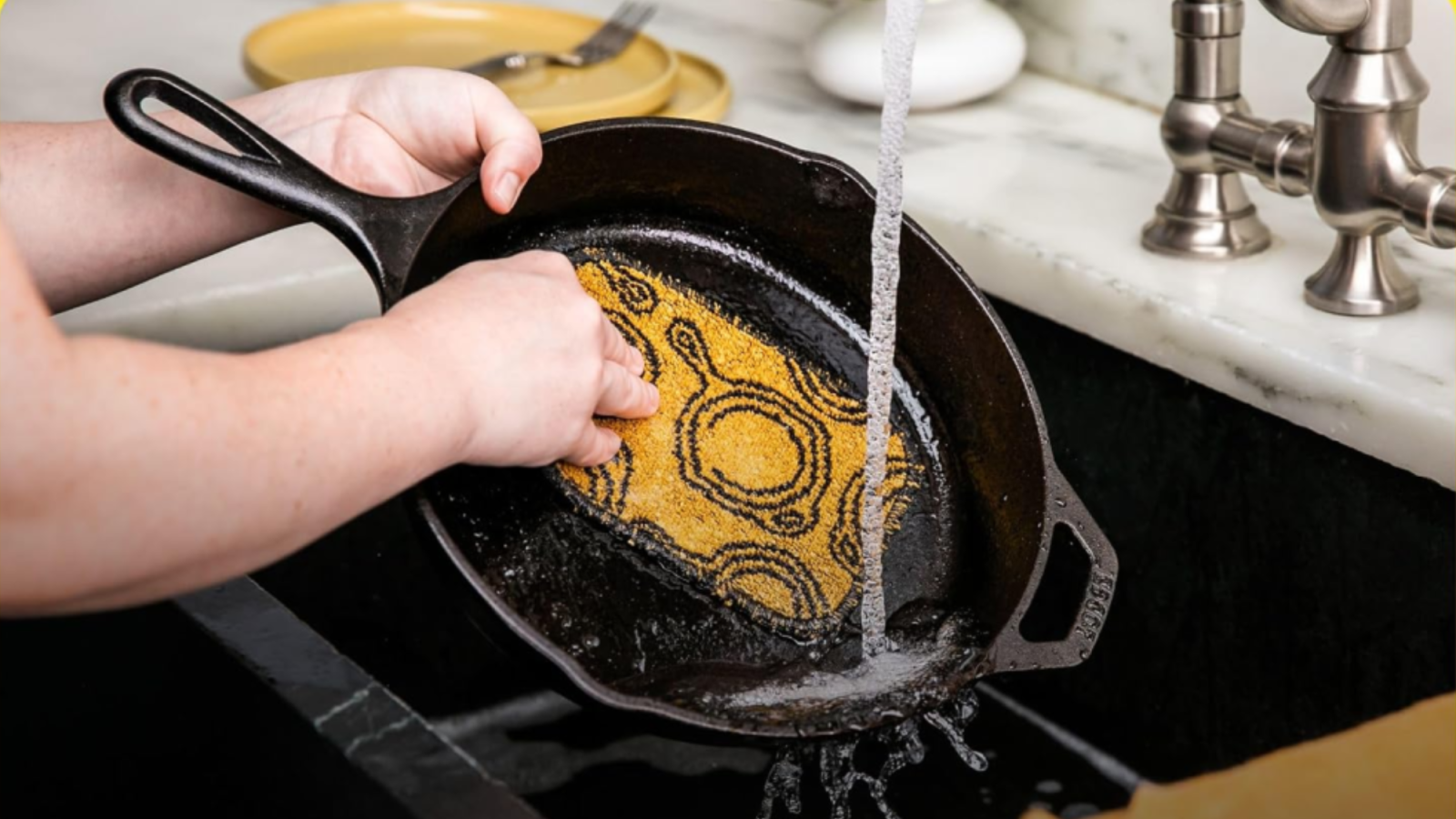
Most people don’t set out to buy non-toxic cookware. They read one headline about PFAS in nonstick pans, look down at their scratched-up Teflon skillet, and suddenly feel like they need a chemistry degree to buy a frying pan.
Traditional nonstick coatings are made with PFAS, PFOA, or PTFE, so-called “forever chemicals” that can break down when a pan gets too hot or too scratched, and leach into whatever you’re cooking. That’s the real reason so many people are switching. But switching doesn’t mean replacing your entire kitchen overnight or learning to season cast iron like a line cook.
Why “Non-Toxic” Matters – What to Look For (And What to Avoid)
What’s in most standard cookware? A nonstick coating (usually PTFE/Teflon) bonded to an aluminum or steel base. Once PTFE hits roughly 570–840°F, it can release fumes that cause short-term flu-like symptoms doctors call “polymer fume fever” (or “Teflon flu”), documented in medical literature since a 1962 DuPont exposure study, with over 265 suspected cases logged in the U.S. in 2023 alone, the highest count since 2000 (NCBI StatPearls). Most home cooking never reaches that range, but an empty pan left on high heat can. Separately, PFAS as a chemical class has been linked by EPA research to reproductive, developmental, and immune effects at certain exposure levels (EPA). Uncoated aluminum can also leach into acidic foods like tomato sauce over time.
What makes cookware genuinely non-toxic? Four materials beginners can trust:
Plastic handles or lids are fine. What matters is what actually touches your food.
What does independent testing actually show? Consumer Reports tested nonstick pans for 96 different PFAS compounds. The ceramic-coated pans in their panel, including entries from Caraway and GreenPancame back with none detected, while performing on par with traditional PTFE nonstick in cooking tests. That’s a real reason both brands show up on this list, not just marketing language. Consumer Reports also warns that not every “non-toxic” claim on a box holds up under testing which is exactly why the certifications called out below matter more than the words on the packaging.
We include affiliate links in this guide. If you buy through them, we earn a small commission at no extra cost to you. We only recommend cookware we’d actually put on our own stove.
The Best Non-Toxic Cookware for Beginners
| Pick | Material | Learning Curve | Best For | Price |
|---|---|---|---|---|
| Our Place Always Pan 2.0 | Ceramic nonstick | Lowest | One pan that replaces 8 | View on Amazon |
| Caraway 12-Piece Set | Ceramic-coated aluminum | Low | A full starter set at once | View on Amazon |
| Lodge Cast Iron Skillet | Cast iron | Low-Medium (seasoning) | Budget buyers, durability | View on Amazon |
| GreenPan Valencia Pro | Ceramic (Thermolon) | Low | Oven-safe versatility | View on Amazon |
| Xtrema 10″ 100% Ceramic | Pure ceramic, uncoated | Medium-High | Zero-coating peace of mind | View on Amazon |
1. Our Place Always Pan 2.0 – Best Single Pan to Start With

Key specs
Best for: Anyone who doesn’t want to buy a whole set on day one
Pros:
✓ One pan handles most weeknight cooking—no set required
✓ Ceramic coating, explicitly PFAS/PTFE-free
✓ Integrated steamer basket and spoon rest built into the design
✓ Beginner-friendly weight and handle balance
✓ Backed by a real warranty and trial period
Cons:
× Not ideal for high-heat searing, ceramic coatings degrade faster above medium-high heat
× A single pan won’t replace a stockpot or saucepan for everything
× Pricier per-pan than a basic ceramic skillet from a big-box store


If you’re not ready to commit to a full cookware set, this is the lowest-friction way to go non-toxic. It’s designed to do the job of several pieces like frying, sautéing, steaming, straining, which matters when you’re still figuring out how much cookware you actually use. The ceramic coating is explicitly PFAS- and PTFE-free, and the pan itself is light enough to lift and flip one-handed, a detail that matters more than it sounds like once you’re cooking with it daily.
In practice, it handles the bulk of weeknight cooking without much fuss: eggs release cleanly, sautéed vegetables don’t stick, and the built-in steamer basket means you can steam broccoli in the same pan you just used to sear chicken. The tradeoff shows up at the high end of the heat range like all ceramic coatings, it’s not built for a hard sear, so a steak that needs real color is going to disappoint you here.
Compared to the Caraway set below, the Always Pan asks for a much smaller upfront commitment, one pan instead of twelve pieces, which makes it the more forgiving choice if you’re not sure how much cookware you’ll actually use. Keep a cast iron skillet (see #3) around for the searing jobs this pan can’t handle, and you’ve covered nearly everything a beginner kitchen needs.
2. Caraway 12-Piece Set – Best Complete Starter Set

Key specs
Best for: Beginners who’d rather buy everything once instead of piece by piece
Pros:
✓ Covers nearly every basic cooking task in one purchase
✓ Included storage system keeps pans from scratching each other
✓ Consistent look and sizing across the whole set
✓ Widely recommended in non-toxic cookware roundups for build quality
Cons:
× Highest upfront cost on this list if you buy the full set
× Ceramic coating has a shorter realistic lifespan (2–3 years with regular use) than cast iron or stainless steel
× Overkill if you’re cooking for one and don’t need six pieces


Caraway is the “buy it once, stop thinking about it” option. Where the Always Pan asks you to start with one piece and add on later, Caraway hands you a complete kitchen setup on day one inclusive of a fry pan, sauté pan, sauce pan, Dutch oven, and lids, all in matching ceramic-coated aluminum, plus a canvas storage system that keeps the pieces from scratching each other in the cabinet.
The pans are lighter than enameled cast iron of a similar size, and the ceramic coating releases food easily right out of the box, without the seasoning or break-in period cast iron demands. Where it falls short is longevity: ceramic coatings like this one have a realistic 2–3 year lifespan under regular use before nonstick performance starts to fade, even with careful hand-washing.
3. Lodge Cast Iron Skillet – Best Budget Pick

Key specs
Best for: Beginners on a tight budget, or anyone who wants cookware that basically can’t wear out
Pros:
✓ Naturally non-toxic—no coating to fail, ever
✓ Extremely cheap to start ($20–$50 for one pan)
✓ Gets better with age instead of wearing out
✓ Works on every cooktop, including outdoor grills and campfires
Cons:
× Requires seasoning upkeep—skip it and food will stick
× Heavy; not ideal if hand strength or joint pain is a concern
× Reactive with acidic foods (tomato sauce, wine) if seasoning is thin
× Learning curve on heat control compared to nonstick


This is the cheapest real entry point into non-toxic cooking, full stop. There’s no coating to evaluate and no certification to check it’s raw cast iron, pre-seasoned at the factory, and it works on literally every heat source: gas, electric, induction, oven, grill, or open campfire.
The seasoning routine intimidates a lot of first-timers, but it’s genuinely a five-minute habit once you’ve done it a couple of times: wipe with a thin layer of oil, heat briefly, let it cool, done. Cook in it regularly and the seasoning builds on its own. Most people find their pan gets more nonstick over the first few months of use, not less, which is the opposite of how ceramic coatings behave over time.
Compared to the ceramic options on this list, cast iron is more forgiving over the long run since there’s no coating to eventually degrade, but it demands more attention in week one. If you want something that works right out of the box with zero learning curve, the Always Pan above is the easier starting point; if you’re fine with a short adjustment period in exchange for cookware that basically lasts forever, this is the better deal.
4. GreenPan Valencia Pro – Best for Oven-Safe Versatility

Key specs
Best for: Beginners who bake or broil as often as they stovetop-cook
Pros:
✓Coating holds up better over time than many other ceramic brands
✓ One of the few ceramic lines with third-party GREENGUARD Gold certification—independently tested for low chemical emissions, not just a brand claim
✓ Works across gas, electric, and induction cooktops
✓ Available as single pieces or as an 11-piece set, so you can start small
Cons:
× The full 11-piece set is a bigger investment (~$280) than buying individual pans
× Handles run hotter than some competitors—use a pot holder even for “quick” stirs
× Like all ceramic coatings, avoid metal utensils to protect the surface


GreenPan sits in the middle of this list on purpose: not as minimal a commitment as the Always Pan, not as big a purchase as the full Caraway set. The Valencia Pro’s Thermolon ceramic coating sits over hard-anodized aluminum and is rated oven-safe to 600°F, well above what most ceramic cookware can handle, which matters if you like finishing a sear under the broiler.
The GREENGUARD Gold certification is worth calling out specifically it’s independent third-party verification of low chemical emissions, not just a brand claim on a box, which puts it in a smaller club than Caraway or Our Place. If oven versatility and third-party-verified safety matter more to you than included storage or brand aesthetics, this is the pick to start with.
5. Xtrema 100% Ceramic – Best for Zero-Coating Peace of Mind

Key specs
Best for: Beginners who specifically want to avoid coated cookware altogether—and are willing to adjust their technique for it.
Pros:
✓ Nothing to coat, scratch, or off-gas—ever
✓ Safe across every cooking method, including microwave
✓ Naturally slick surface once you learn proper preheating
✓ Lasts indefinitely with reasonable care
Cons:
× Real learning curve—heats and cools more slowly than metal cookware, and skipping the preheat step causes sticking
× Heavier and more breakable than metal options if dropped
× Smaller size and style selection than Caraway or GreenPan


We’re putting this last on purpose. It’s the most rigorously non-toxic option on this list, 100% ceramic, no metal core, no coating at all to debate the safety of, but it’s also the least beginner-friendly to cook with on day one.
If total peace of mind about materials is your top priority and you’re willing to spend a week or two adjusting your technique, this is worth the tradeoff over the ceramic-coated picks above. If you just want something that works right out of the box with no adjustment period, start with the Always Pan or the Lodge skillet instead.
FAQs
Do I need a full cookware set to go non-toxic, or can I start with one pan?
Start with one pan. The Always Pan or a single Lodge cast iron skillet covers most everyday cooking. Add pieces as you figure out what you’re actually missing.
Is cast iron really beginner-friendly if it needs seasoning?
Yes, once you get past the first week. Seasoning sounds intimidating but is a quick, repeatable habit—most of the “cast iron is hard to maintain” reputation comes from over-thinking it.
Is ceramic-coated cookware as non-toxic as uncoated cookware?
Ceramic coatings (Thermolon, etc.) are PFAS- and PTFE-free—fundamentally different chemistry from Teflon. They’re not identical to 100% uncoated ceramic or cast iron, but they’re considered a safe, verified option by every major non-toxic cookware guide.
How long does ceramic nonstick cookware actually last?
Realistically 2–3 years with regular use before nonstick performance fades, even with careful care. Cast iron and stainless steel last far longer, which is worth factoring into the total cost.
Can I put non-toxic cookware in the dishwasher?
Most ceramic-coated pieces are dishwasher-safe, though hand-washing extends their lifespan. Cast iron should always be hand-washed—no soap needed once seasoned.
What should I avoid buying by mistake?
Watch for cookware marketed as “PFOA-free” without also saying “PFAS-free” or “PTFE-free”—some brands swap one forever chemical for another and lean on the more familiar-sounding label. The FDA has already had to revoke approval on some PFAS food-contact uses that turned out riskier than first assumed (FDA), and Consumer Reports has found that not every “non-toxic” label actually holds up under lab testing. A named, verifiable certification—like GREENGUARD Gold or a brand’s published PFAS test results—means more than a phrase on the box.
Conclusion—Which Non-Toxic Cookware Should a Beginner Buy First?
| If you want… | Get this |
|---|---|
| The lowest-effort way to start | Our Place Always Pan 2.0 |
| Everything at once, done | Caraway 12-Piece Set |
| The cheapest real option | Lodge Cast Iron Skillet |
| Oven-safe versatility with certification | GreenPan Valencia Pro |
| Zero coating, no compromises | Xtrema 10″ 100% Ceramic |
You don’t need to solve your entire kitchen this weekend. Pick the one piece that matches how you actually cook, use it for a month, and decide from there whether you want to build out a full set. That’s a more honest starting point than any “buy everything now” list.
Now go make dinner without wondering what’s leaching into it.
Related:
