
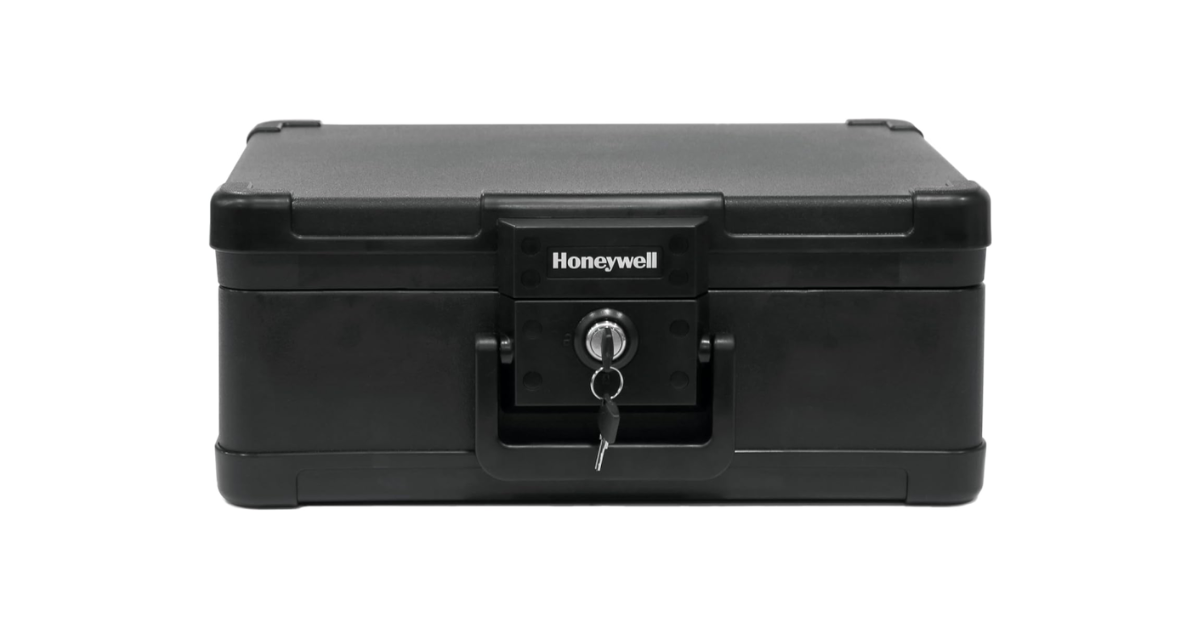
A UL-classified fireproof box protects paper documents at temperatures up to 1550°F for at least 30 minutes. A bag or organizer that only claims “fireproof” on the packaging has usually passed a much weaker flammability test, not a fire endurance test, and the difference matters the day your house actually catches fire.
Most people buy one of these after a close call: a neighbor’s fire, a wildfire evacuation order, or just finally locating the deed to the house and realizing it lives in a random kitchen drawer. Below are six fireproof boxes and safes worth buying, what each one actually protects against, and which documents deserve a spot inside.
Not every piece of paper needs this level of protection. If your bigger problem is a junk drawer full of old mail and receipts, start with 9 easy ways to reduce paper clutter before you decide what’s actually worth fireproofing.
Affiliate disclosure: SmartVentureHub may earn a commission if you buy through links on this page, at no extra cost to you.
Our Top Picks at a Glance
| Award | Product | Fire Rating | Price Range | Deciding Factor |
|---|---|---|---|---|
| Best Overall | SentrySafe HD4100 | UL 30 min / 1550°F | $70 – $90 | Fire and flood protection in one chest |
| Best Budget | SentrySafe 1170 | UL 30 min / 1550°F | $50 – $65 | Cheapest UL-classified box on this list |
| Best for Legal-Size Files | Honeywell 1108 | UL 60 min / 1700°F | $120 – $200 | Longest fire rating and largest capacity |
| Best Portable | Honeywell 1503 | ETL 30 min / 1550°F | $60 – $150 | Carry handle built for grab-and-go |
| Best Digital Lock | SentrySafe SFW123GDC | UL 60 min / 1700°F | $200 – $400 | Steel body plus programmable keypad |
| Best Budget Organizer | ENGPOW Document Organizer | Not UL-tested | $30 – $45 | Cheapest option, lower protection tier |
What’s the Difference Between a Fireproof Document Box and a Fireproof Safe?
A fireproof document box protects paper from heat and sometimes water. A fireproof safe adds real security against theft and forced entry.
Document boxes like the SentrySafe 1170 use a resin-cased insulation shell and a basic privacy lock. That lock keeps kids and casual snoopers out. It will not stop someone with a crowbar and five minutes alone with the box.
A safe like the SentrySafe SFW123GDC adds solid steel construction, multiple locking bolts, and a pry-resistant hinge bar. That is a genuinely different level of theft resistance, and it is why steel safes cost three to five times more than a resin document box of similar size.
If your main worry is fire and flood, a document box is enough. If you are also storing cash, jewelry, or a firearm alongside your paperwork, spend the extra money on a steel safe.
Keep in mind a fireproof box is for the documents you can’t replace, not everyday filing. If you want to see the difference, our best filing cabinets for small spaces guide covers where the bulk of your paperwork should actually live day to day.
What Does a UL Fire Rating Actually Mean?
A UL 72 fire rating means an independent lab tested the box in a real furnace, not a manufacturer’s marketing claim. The UL 72 standard exposes the safe to a controlled fire, then measures the interior temperature.
Class 350 devices, the most common rating for paper, must keep the inside below 350°F. Paper starts to scorch and become unreadable well above that, so 350°F is the practical ceiling for keeping documents intact.
The label on the box tells you the duration and the furnace temperature; the class number tells you the internal temperature limit. A “UL Classified, 1/2 hour, 1550°F” label means the box survived a 1550°F furnace for 30 minutes while staying below 350°F inside. FireKing’s own ratings page breaks down each class if you want the full list.
Here’s the part that trips people up: a product can say “fireproof” without ever going through this test. Several budget organizers on this list are rated to a completely different standard, UL94, which measures how quickly a plastic material stops burning once the flame source is removed. That is a real, useful test. It is not the same thing as surviving a house fire for 30 minutes, and a product that only carries a UL94 rating should be priced and treated accordingly.
SentrySafe HD4100 – Best Overall

| Feature | Specification Details |
|---|---|
| Physical Dimensions | 14.3 in W x 13.5 in D x 15.5 in H, 38.9 lbs |
| Water Protection | ETL Verified, 72 hours fully submerged up to 3.28 ft |
| Box Contents | HD4100 chest, 2 entry keys, in-lid organizer tray |
The HD4100 is the pick to buy if you want one box that handles both fire and flood without paying for a steel safe. It carries a UL Classification for 30 minutes at 1550°F, and SentrySafe backs that with a lifetime after-fire replacement guarantee for the original owner.
At 0.65 cubic feet, it fits a stack of letter-size hanging folders (sold separately) plus room for a passport or two in the in-lid tray. The privacy key lock is not going to stop a determined burglar, but that is not the job here. This box is doing double duty against the two disasters that actually destroy paper records: fire and standing water from a burst pipe or flooded basement.
The double-wall resin shell adds real weight. At nearly 39 pounds empty, this is not a box you casually move once it is loaded and placed.
Pros
Cons
Buy This If: you want one box that handles both fire and a flooded basement, and you’re storing a typical household’s worth of documents.
Skip This If: you need to store a firearm or valuables that require real theft resistance, not just fire and water protection.
Honeywell 1108 – Best for Legal-Size Files and Large Capacity

| Feature | Specification Details |
|---|---|
| Physical Dimensions | 19.96 in W x 17.17 in D x 13.58 in H, 80.5 lbs |
| Warranty Length | Not published on this product page |
| Box Contents | 1108 chest, installation and operation guide, 2 entry keys |
| Water Protection | Certified 100 hours submerged up to 1 meter (3.28 ft) |
The Honeywell 1102 is the one to buy if you need to store legal-size documents or a genuinely large volume of paper. At 1.06 cubic feet, it holds close to double what the SentrySafe HD4100 does, and it fits letter, A4, and legal-size hanging folders without folding anything over.
It also carries the strongest fire rating on this list: a full 60 minutes at temperatures up to 1700°F, twice the duration of every other pick here. The double-wall plastic construction with reinforced corners and load-bearing safety hinges is built to support the lid’s own weight when it’s open and loaded, which matters more than it sounds once you’re digging through hanging files one-handed.
Honeywell’s product page doesn’t list a warranty term for this specific model, which is worth flagging rather than guessing at. The company does offer a lifetime after-fire replacement guarantee across its fire chest line, confirmed on other models in the same series, but you should check the manual that ships with your unit for the exact terms.
Pros
Cons
Buy This If: you have a genuine legal-size filing habit or a full household archive to protect, and you have the floor space for it.
Skip This If: you live somewhere space-constrained; this is the largest and heaviest box on this list by a wide margin.
SentrySafe 1170 – Best Budget Document Box

| Feature | Specification Details |
|---|---|
| Physical Dimensions | 13.6 in W x 12.1 in D x 15.3 in H, 28.0 lbs |
| Water Protection | None; fire protection only |
| Box Contents | 1170 file cabinet, 2 entry keys |
The 1170 is the cheapest UL-classified fireproof box on this list, and it’s the one to buy if flood protection isn’t a real risk where you live. It carries the same 30-minute, 1550°F UL Classification as the pricier HD4100, minus the ETL water rating and the in-lid organizer tray.
At 0.61 cubic feet, it fits hanging file folders sold separately, and the privacy key lock ships with two keys. This is a fire box in the plainest sense: no digital lock, no fold-out organizer, no bundled accessories beyond the keys. For a lot of households, that’s the right amount of product for the job.
The tradeoff for the lower price is a fire-only rating. If your area floods, or you’re storing this in a basement, that gap matters more than the dollars saved.
Pros
Cons
Buy This If: you want the cheapest genuinely UL-classified fire box and flooding isn’t a real concern in your home.
Skip This If: you’re in a flood-prone area or storing this box in a basement; spend the extra money on the HD4100’s water rating instead.
Honeywell 1503 – Best Portable

| Feature | Specification Details |
|---|---|
| Physical Dimensions | 15.98 in W x 12.60 in D x 6.57 in H, 21.6 lbs |
| Warranty Length | 5-year limited warranty, plus lifetime after-fire replacement guarantee |
| Box Contents | 1503 chest, installation and operation guide, 2 entry keys |
| Water Protection | Certified 72 hours submerged up to 1 meter (3.28 ft) |
The Honeywell 1503 is the pick if you actually need to grab this box and leave, not just store it in a closet. At 21.6 pounds empty, it’s the lightest fire-and-water rated chest on this list, and the built-in carry handle is sized for one-handed transport during an evacuation.
It carries an ETL 30-minute rating at up to 1550°F, plus a 72-hour waterproof rating, the same water protection tier as the much larger Honeywell 1108. Honeywell backs it with a published 5-year limited warranty and the same lifetime after-fire replacement guarantee found across its fire chest line.
The interior is small: 0.24 cubic feet, enough for passports, a will, a handful of certificates, and maybe a small external drive. This is not a filing box. It’s a grab-and-go chest for the documents you’d actually carry out the door.
Pros
Cons
Buy This If: you want a genuinely portable chest for evacuation, not a filing box that happens to have a handle.
Skip This If: you need to store more than a small stack of core documents; the capacity here is the tradeoff for the light weight.
SentrySafe SFW123GDC – Best Digital Lock

| Feature | Specification Details |
|---|---|
| Physical Dimensions | 16.3 in W x 19.3 in D x 17.8 in H, 86.7 lbs |
| Water Protection | ETL Verified, up to 8 in of water for 24 hours |
| Box Contents | Safe body, key rack, door tray, adjustable locking drawer, 2 override keys |
The SFW123GDC is the safe to buy once you’re storing valuables alongside your documents, not just paper. Solid steel construction, 2 to 4 live-locking bolts, and a pry-resistant hinge bar put it in a different security class from every resin document box on this list.
It’s UL Classified for a full hour at up to 1700°F, matching the Honeywell 1108’s fire duration, and the 1.23 cubic foot interior includes an adjustable locking drawer, a key rack, and a door pocket for small items you want separated from loose files. The digital keypad takes a programmable 5-digit code, with a dual key override if the battery dies or someone forgets the code.
The water rating here is the one honest tradeoff. It’s certified for 8 inches of water over 24 hours, not full submersion. If flooding is a real risk where you live, this steel safe protects against fire and theft better than anything else on this list, but the resin chests above it handle a genuine flood better.
Pros
Cons
Buy This If: you’re storing cash, jewelry, or a firearm alongside your paperwork and want real theft resistance.
Skip This If: your only concern is fire and flood protection for paper; a resin document box does that job for a fraction of the price.
ENGPOW Fireproof Document Organizer – Best Budget Organizer

| Feature | Specification Details |
|---|---|
| Physical Dimensions | Not published by manufacturer in exact form; approximately 15.5 in W x 12.2 in D x 10 in H |
| Fire Standard | UL94 VTM-0 flame-retardant certification (not a UL 72 fire-endurance rating) |
| Box Contents | Organizer body, combination lock, mesh passport pockets, card slots |
The ENGPOW organizer is worth buying only if you understand exactly what it does and doesn’t protect against. It’s a collapsible, silicone-coated fiberglass folder with a combination lock, priced far below every UL-classified box on this list, and it fills a real gap: cheap, lightweight, grab-and-go organization for documents that matter but aren’t irreplaceable.
It carries a UL94 VTM-0 certification, which measures how a material’s flame self-extinguishes, not how long the interior stays cool during a sustained house fire. That’s a genuinely different and much weaker standard than the UL 72 classification carried by every other product on this list. Treat the manufacturer’s “up to 5200°F” heat-resistance claim as a material property, not a survival guarantee for the documents inside.
The collapsible design and mesh pockets make it good for travel and short-term organization. It is not a substitute for a UL-classified box if fire is your actual concern.
Pros
Cons
Buy This If: you want a cheap, portable organizer for documents you’d like protected but could still replace if you had to.
Skip This If: you’re storing anything irreplaceable, a deed, a will, an original birth certificate; pay for a UL-classified box instead.
Products We Considered But Didn’t Include (And Why)
Amazon Basics fireproof file box. Several review sites still reference an Amazon Basics fireproof document box, but a current search of Amazon’s own listings turned up no active Amazon Basics product in this category. If it’s been discontinued, recommending it would send readers to a dead listing.
FireKing Personal Safe. FireKing makes genuinely well-rated fire-rated file cabinets and safes, and its site publishes a clear breakdown of UL classes. But the personal safe line’s own product page doesn’t state a specific UL fire-endurance rating for the unit itself, and it’s priced above every safe on this list for a product whose fire protection isn’t clearly documented. We’d rather point you to a model where the rating is confirmed.
What Documents Should Actually Go in a Fireproof Box?
The documents worth fireproofing are the ones that are slow, expensive, or impossible to replace. That means birth certificates, marriage and death certificates, social security cards, passports, property deeds, vehicle titles, wills, and insurance policies.
Ready.gov’s financial preparedness guidance recommends keeping paper originals of these documents in a fireproof, waterproof box or safe at home, with a second copy at a bank safe deposit box or with a trusted relative. FEMA’s guide to safeguarding critical documents adds medical records, powers of attorney, and recent tax returns to that list.
Tax records deserve their own line. The IRS generally recommends keeping tax returns for at least three years after filing, longer if you’ve underreported income or claimed a bad debt deduction. Keep the current year plus the prior two or three inside the box, and archive older returns separately once they age out.
Not everything belongs in this box. Old utility bills and statements you can pull up online any time are better off scanned and shredded; if that’s the bigger project on your plate, read our guide to going paperless at home for the documents that are fine to digitize instead of storing as originals.
One document people forget until it’s gone: your Social Security card. Replacing a lost card is free, but it still takes 5 to 10 business days and, in many cases, an in-person appointment if you can’t verify online. Keeping the original safe skips that entirely.
The FTC’s guide to organizing papers before a disaster makes one more point worth repeating: don’t just dump loose papers in the box. If you need a system, our guide to setting up a binder system covers how to organize documents so you can find what you need in an actual emergency, not just during a calm afternoon of organizing.
Do You Need Waterproof Protection Too?
Yes, in most parts of the country, because sprinkler systems and firefighting hoses do as much damage to unprotected paper as the fire itself. A fire-only box like the SentrySafe 1170 will survive the flames; it won’t survive the several thousand gallons of water a fire department typically uses to put the fire out.
Home structure fires aren’t rare. NFPA’s home structure fire research tracks them as a routine, ongoing risk category, not a freak event, which is exactly why insurance companies and disaster-preparedness agencies both recommend fireproof and waterproof storage as a baseline, not an upgrade.
If you live somewhere with real flood risk (a basement office, a flood zone, a coastal area) prioritize a box with a submersion rating measured in hours, not minutes. If your bigger risk is fire alone and you want to save money, a fire-only box is a legitimate choice; just know what you’re trading away.
Where Should You Put a Fireproof Safe in Your House?
Put it on a ground floor, away from exterior walls, and bolted down if the model supports it. A safe on an upper floor risks a floor collapse dropping it into the fire below. An exterior wall is the first thing to fail in some fire patterns.
Closets, home offices, and the space under a stairwell all work, as long as the location isn’t directly above the kitchen or another common fire-origin room. If you’re storing a steel safe like the SFW123GDC, use the included bolt-down hardware; a heavy safe that isn’t anchored is both a theft risk and, in a flood, something that can shift and damage the wall around it.
For the lighter document boxes, weight isn’t a structural concern, but findability is. Keep it somewhere a family member could locate and carry it out in under a minute, not buried behind storage bins in the back of a closet.
Frequently Asked Questions
How long do fireproof safes actually protect documents?
Most consumer fireproof boxes are UL Classified for 30 minutes to 1 hour at temperatures up to 1550°F to 1700°F, keeping the interior below 350°F during that window. That’s long enough for firefighters to respond and extinguish a typical house fire, not an indefinite guarantee against a prolonged blaze.
Is a fireproof bag or organizer as good as a fireproof safe?
No. A fireproof bag or organizer is usually rated to UL94, which tests how quickly a material self-extinguishes, not how well it protects contents during a sustained fire. A UL 72-classified safe or box has been tested in an actual furnace and is the stronger choice for irreplaceable documents.
What should never go in a fireproof safe?
Skip anything flammable or explosive, including spare ammunition rounds without proper separation, aerosol cans, and loose cash you’d rather keep in a bank. Most manufacturer manuals also warn against storing unprotected digital media like USB drives or hard drives unless the model specifically rates for digital media protection.
Do I need to bolt down a fireproof safe?
Bolting down is optional for lightweight document boxes but recommended for heavier steel safes, since an unanchored safe can be carried off by a burglar or shifted during a flood. Models like the SentrySafe SFW123GDC include bolt-down hardware for exactly this reason.
Can a fireproof safe protect a laptop or external hard drive?
Only if the safe specifically states digital media protection, since electronics fail at much lower temperatures than paper. A box rated to keep paper below 350°F can still get hot enough inside to damage a hard drive or laptop battery, so check for a digital media rating before storing electronics long-term.
Conclusion
The SentrySafe HD4100 covers fire and flood in one box, and that combination is worth the extra cost for most households. If you want to spend less and flooding isn’t a real risk, the SentrySafe 1170 gets the same fire rating for less money.
If you’re protecting a genuine archive of legal-size files, size up to the Honeywell 1108. If you need something you can grab in one hand on the way out the door, the Honeywell 1503 is built for exactly that. Whatever you pick, check for an actual UL 72 classification before you trust it with a document you can’t replace.
Related:
