Disclosure: we may earn a commission if you buy through links on this page, at no extra cost to you. How we make money
Camera drones have completely transformed photography and videography in 2026. What was once considered niche technology reserved for filmmakers and commercial pilots has now become an essential creative tool for travelers, vloggers, photographers, real estate agents, and content creators worldwide.
Modern drones are smarter, safer, and easier to fly than ever before. Today’s top drones feature advanced AI-powered tracking systems, cinematic 4K and 6K video recording, obstacle avoidance sensors, extended battery life, and lightweight foldable designs that make them highly portable.
Whether you are searching for a beginner-friendly drone for casual flying, a compact travel drone for social media content, or a professional aerial cinema platform for commercial production, there is now a drone tailored for every skill level and shooting style.
In this guide, we explore the best camera drones of 2026 in detail, including their key specifications, strengths, weaknesses, and the type of users they are best suited for.
1.DJI Mini 4 Pro
Best for Most People
The DJI Mini 4 Pro remains one of the most popular and highly recommended drones in 2026 because it delivers an exceptional combination of portability, intelligent flight performance, and professional-level imaging in a compact, travel-friendly body.
One of its most important advantages is its ultra-lightweight design, weighing just under the 250-gram threshold. This makes it especially appealing to recreational users, as it often avoids stricter registration requirements in many regions, making it easier to travel with and fly in everyday situations.
In real-world use, it performs far beyond what its size suggests, making it a true “all-in-one” drone for travel creators, vloggers, and casual photographers who still want professional-looking results.
Specifications
48MP High-Resolution Camera Sensor – Captures highly detailed aerial photos with excellent clarity, color accuracy, and improved low-light performance.
4K HDR Video Recording – Produces cinematic-quality footage with rich colors, strong contrast, and balanced highlights and shadows.
Omnidirectional Obstacle Sensing System – Detects obstacles in all directions to help prevent collisions and ensure safer, more stable flight.
Long-Range O4 Video Transmission Technology – Delivers a stable, low-latency HD live video feed over long distances for reliable real-time control.
Advanced AI Subject Tracking – Automatically recognizes and follows moving subjects smoothly while keeping them centered in the frame.
Pros
Exceptional Portability-Its compact foldable design makes it ideal for travelers, hikers, vloggers, and creators constantly on the move.
Advanced Safety Features-Omnidirectional obstacle avoidance dramatically reduces collision risks, especially for beginners flying near trees, buildings, or tight environments.
Excellent Video Quality-The camera produces sharp, vibrant footage with strong dynamic range and impressive stabilization.
Cons
Limited Wind Resistance-Due to its lightweight construction, strong winds can affect stability more than larger drones.
Smaller Sensor Compared to Professional Models-Although image quality is excellent, larger professional drones still perform better in low-light conditions.
Premium Features Require Learning-While beginner-friendly overall, mastering advanced cinematic flight modes may take time.
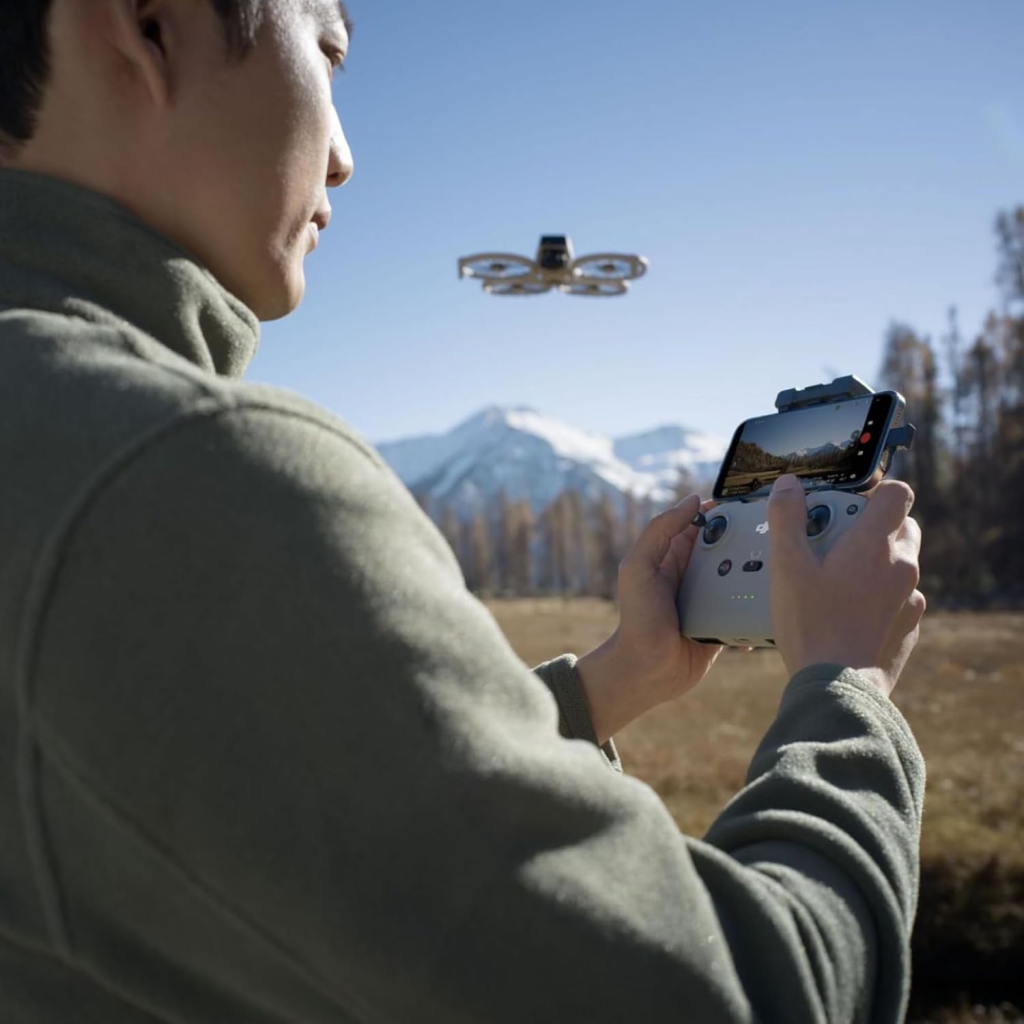
The DJI Flip stands out in 2026 as one of the most thoughtfully designed entry-level drones, offering a rare balance of affordability, ease of use, and surprisingly capable imaging performance. It is built specifically for beginners and casual creators who want to capture high-quality aerial content without dealing with the complexity or risk that often comes with advanced drone systems.
Despite its budget-friendly positioning, the DJI Flip does not feel “basic” in use. It offers stable flight control, responsive handling, and reliable GPS-assisted hovering that makes it easy to capture smooth footage even for first-time users. Its lightweight and compact design also makes it highly portable, allowing users to carry it easily for travel, street content creation, or spontaneous shooting sessions.
Overall, the DJI Flip is positioned as a beginner-friendly drone that doesn’t feel limited. It brings together safety, simplicity, and social-media-ready features in a way that makes aerial photography accessible to a much wider audience.
Key Specifications
48MP camera – Captures highly detailed, sharp aerial photos with strong clarity and color depth for both casual and creative use.
4K/60fps HDR video – Records smooth, cinematic footage with enhanced dynamic range for vibrant highlights and shadows.
Built-in propeller guards – Integrated protection system that improves safety and reduces damage risk during crashes or beginner mistakes.
Lightweight compact body – Ultra-portable design that makes it easy to carry, travel with, and fly in a wide range of environments.
Vertical video support – Enables native portrait shooting optimized for TikTok, Instagram Reels, and other social media platforms.
Pros
Excellent for Beginners-The protective propeller cages increase confidence for first-time users.
Great Social Media Features-Native vertical shooting support makes it ideal for mobile-first creators.
Compact and Portable-Easy to carry while traveling or commuting.
Strong Camera Performance-Produces surprisingly detailed footage for a lightweight drone.
Cons
No Advanced Obstacle Sensors-Pilots must rely more heavily on manual awareness and careful flying.
Reduced Advanced Features-Professional cinematic tools are more limited compared to higher-end models.
Less Wind Stability-Its lightweight body can struggle in harsh outdoor conditions.
The DJI Mavic 4 Pro stands at the top tier of professional drones in 2026, engineered specifically for filmmakers, commercial photographers, and content creators who require uncompromising image quality, precision flight control, and advanced aerial filmmaking capabilities.
It represents DJI’s most refined balance of power, intelligence, and creative flexibility, making it a leading choice for high-end drone cinematography and professional production workflows.
The drone also benefits from DJI’s advanced flight intelligence system, offering smooth stabilization, extended transmission range, and precise control responsiveness. These features ensure that creators can focus entirely on composition and storytelling without being limited by technical constraints.
Overall, the DJI Mavic 4 Pro is not just a drone it is a professional aerial cinematography platform built for creators who demand industry-leading performance, cinematic output, and unmatched creative control in 2026.
Specifications
Triple-camera system with 100MP Hasselblad sensor – Delivers ultra-high-resolution imaging with exceptional color accuracy, dynamic range, and professional-grade detail for cinematic photography.
6K HDR video recording – Produces ultra-sharp, richly detailed footage with enhanced highlights and shadows, ideal for high-end film production and commercial work.
Advanced omnidirectional obstacle sensing – Provides full 360° environmental awareness using multiple sensors to detect and avoid obstacles in complex flying conditions.
Extended-range transmission system – Ensures stable, low-latency video feed and control over long distances for reliable professional field operation.
AI-powered flight modes – Enables intelligent subject tracking, automated cinematic movements, and smart route planning for smoother production workflows.
Pros
Industry-leading image quality – Captures ultra-sharp, cinematic footage with exceptional detail and color accuracy, making it suitable for professional and commercial production.
Outstanding low-light performance – Equipped with large, advanced sensors that deliver cleaner images, reduced noise, and improved clarity in nighttime or low-light conditions.
Superior obstacle avoidance – Uses LiDAR-assisted navigation and advanced sensing systems to detect and avoid obstacles, ensuring safer flights in complex environments.
Exceptional stabilization – Features a high-precision gimbal system that maintains smooth, steady footage even during fast movement or windy conditions.
Professional workflow support – Designed to integrate seamlessly with advanced editing and color grading workflows for cinematic post-production flexibility.
Cons
Less portable compared to compact travel drones – Its larger professional-grade design makes it less convenient for ultra-light travel and quick everyday transport.
More complex controls – Advanced flight systems and professional shooting features require time and experience to fully master.
Overkill for casual users – Many beginner and recreational pilots may never fully utilize its high-end cinematic and commercial capabilities.
The Antigravity A1 emerges as one of the most innovative non-DJI drones in 2026, redefining aerial storytelling through its fully immersive 360-degree capture system. Instead of focusing on a single fixed perspective, it is engineered to record the entire environment in every direction at once, giving creators complete freedom to shape their final footage in post-production.
This makes it a powerful tool for filmmakers, travel creators, and experimental content producers who want to push beyond traditional drone cinematography.
In essence, the Antigravity A1 is not just a drone but a creative imaging platform designed to transform how aerial footage is captured, edited, and experienced.
Specifications
Dual-lens 360-degree camera system – Captures fully spherical footage in all directions simultaneously, eliminating blind spots and enabling complete environmental coverage for immersive storytelling.
8K immersive video recording – Delivers ultra-high-resolution panoramic video with exceptional detail, clarity, and flexibility for advanced post-production reframing and editing.
FPV Vision Goggles compatibility – Supports first-person immersive flight experience, allowing pilots to view real-time aerial footage as if they are onboard the drone.
Motion grip controller – Intuitive handheld control system that translates natural hand movements into smooth, precise flight direction and camera motion.
Pros
Incredible creative flexibility – Allows complete post-production control, enabling creators to reframe, crop, and adjust perspectives after filming without losing image quality.
Immersive 360 content – Captures fully spherical footage ideal for VR experiences, cinematic travel storytelling, and highly engaging social media visuals.
Excellent FPV experience – FPV goggles deliver an immersive real-time flying view, making pilots feel fully connected to the drone’s perspective.
Cons
More demanding editing workflow – 360-degree footage requires more time and processing in post-production, especially when reframing and selecting final angles.
Shorter battery performance – High-resolution 360 capture and advanced processing consume more power, resulting in reduced flight time compared to standard drones.
The DJI Mini 4 Pro continues to dominate the compact drone category in 2026 as one of the most well-balanced and versatile drones available for both beginners and experienced creators.
It has built a strong reputation as a “do-it-all” aerial platform, combining portability, intelligent flight performance, and professional-grade imaging in a lightweight, travel-friendly design. For many users, it represents the ideal entry point into high-quality drone photography without the complexity or bulk of larger professional systems..
In essence, the DJI Mini 4 Pro stands out not just as a compact drone, but as a complete creative tool that balances portability, intelligence, and imaging quality, making it one of the most recommended drones for everyday use in 2026.
Specifications
Ultra-lightweight body – Designed for maximum portability and easy transport, making it ideal for everyday use and travel.
Palm-launch capability – Allows the drone to take off directly from the palm, enabling quick, controller-free operation.
AI facial tracking – Intelligently recognizes and follows human faces to keep subjects centered in the frame automatically.
Automated cinematic flight paths – Pre-programmed movement modes that create smooth, professional-looking aerial shots with minimal user input.
4K video recording – Captures high-resolution footage with sharp detail and vibrant color suitable for content creation.
Pros
Extremely beginner friendly – Designed with simplified controls that allow new users to fly confidently without prior drone experience or technical training.
Perfect for solo creators – Ideal for independent content production, especially for travel vlogs, lifestyle clips, and quick social media uploads.
Highly portable – Ultra-compact design that easily fits into pockets or small bags, making it convenient for on-the-go shooting.
Intelligent AI tracking – Smart subject tracking system that automatically follows movement smoothly and keeps subjects consistently framed.
Cons
Limited flight range – Optimized for close-range aerial shooting, making it less suitable for long-distance exploration or wide-area coverage.
Not ideal in strong winds – Its ultra-lightweight build can reduce stability and performance when flying in windy outdoor conditions.
Fewer manual controls – Offers simplified operation, which may feel restrictive to experienced pilots who prefer full manual flight customization and advanced settings.
What is the best drone for beginners? The DJI Mini 4K and DJI Flip are among the best beginner-friendly drones in 2026 because they combine simplified flight controls, stable hovering systems, and lightweight, travel-friendly designs that make them easy to fly with minimal experience.
Which drone has the best camera quality? The DJI Mavic 4 Pro currently leads in aerial image quality thanks to its advanced 100MP Hasselblad sensor and high-end 6K HDR video recording, delivering exceptional detail, color accuracy, and cinematic performance for professional use.
Are lightweight drones better? Lightweight drones are highly convenient because they are easier to carry, faster to deploy, and often subject to fewer regulations in certain regions. However, larger drones typically offer better wind resistance, longer flight times, larger sensors, and improved overall stability, making them more suitable for professional or demanding conditions.
Do drones work without internet? Yes. Most modern drones do not require an internet connection to fly. They rely mainly on GPS positioning systems and radio frequency transmission between the drone and controller for navigation, control, and live video feed.
What is obstacle avoidance? Obstacle avoidance is an intelligent safety feature that uses sensors and AI technology to detect objects in the drone’s flight path, automatically helping to prevent collisions and improve flight safety, especially in complex or crowded environments.
The drone market in 2026 has reached an impressive level of innovation, offering something for every type of user from complete beginners to professional filmmakers. Whether your priority is ease of use, cinematic image quality, portability, or creative freedom, today’s top drones are designed to meet those needs with remarkable precision.
For beginners, models like the DJI Mini 4K and DJI Flip provide a smooth entry into aerial photography thanks to their stable flight systems, simplified controls, and lightweight builds that make learning both safe and enjoyable. On the other hand, professionals seeking unmatched image quality will find the DJI Mavic 4 Pro leading the way with its advanced imaging system, cinematic HDR capabilities, and powerful flight performance.
Ultimately, the best drone for you depends on your experience level, creative goals, and how you plan to use it. Whether you are capturing travel memories, creating social media content, or producing professional cinematic footage, the right drone will significantly enhance your storytelling and open up entirely new perspectives from the sky.
As drone technology continues to evolve, aerial photography is becoming more intuitive, more powerful, and more accessible to everyone making this the perfect time to take flight.
Sebastian Muema is a content writer and affiliate marketer specializing in product reviews, buyer guides, and digital tools that help creators and professionals make informed purchasing decisions. With a background in Communication and Media Technology, he combines research, SEO-driven content, and clear storytelling to create honest, value-focused reviews across tech, productivity, and creator equipment. His goal is to simplify complex buying decisions by delivering accurate, up-to-date, and reader-friendly content that drives trust and conversions.